AI Hardware's Disposable Era: How the Obsolescence Treadmill Is Burning Enterprises and the Planet
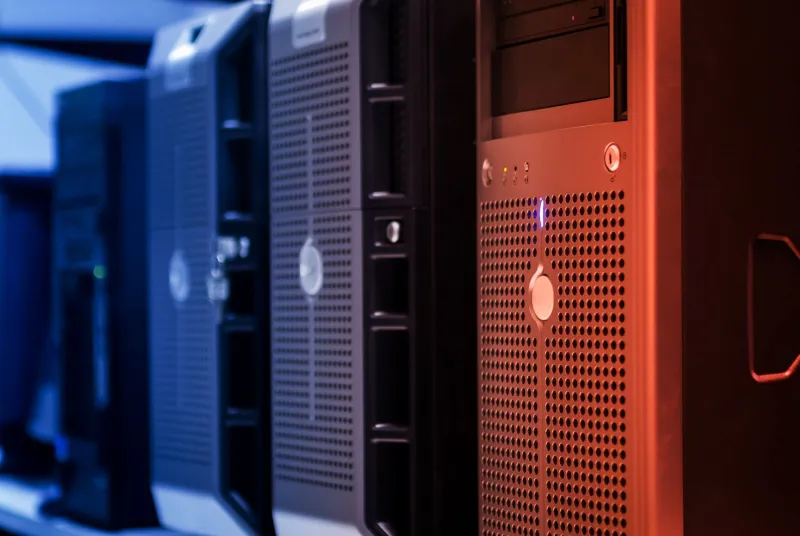
There's a graveyard growing inside enterprise data centers across America, and it's filling up faster than anyone expected. Row after row of GPU clusters — purchased at eye-watering prices just 18 to 24 months ago — are quietly being benched, traded off, or simply warehoused because newer architectures have made them economically awkward to run at scale. This isn't your grandfather's hardware refresh cycle. This is something more aggressive, more expensive, and frankly more wasteful than the tech industry has produced in decades.
Welcome to AI hardware's disposable era.
From Flagship to Footnote in Under Two Years
Let's put some numbers on this. An H100 cluster that cost a mid-sized AI startup somewhere north of $10 million to build out in early 2023 is already being outperformed — on cost-per-token benchmarks — by newer silicon that wasn't even taped out when those purchase orders were signed. NVIDIA's Blackwell architecture, AMD's MI300X momentum, and a growing wave of custom ASICs from hyperscalers have collectively moved the performance-per-watt goalposts so far that previous-generation hardware isn't just slower; it's genuinely more expensive to operate relative to what it produces.
For startups that stretched their runway to buy in on the last generation, this stings in a very particular way. Depreciation schedules that assumed a five-year useful life are now being quietly revised. CFOs are having uncomfortable conversations about write-downs. And the hardware itself? It's not going anywhere useful anytime soon.
What's Actually Driving the Acceleration
So why is this cycle moving so much faster than, say, the GPU upgrade cycles of the gaming era? A few architectural shifts are doing most of the heavy lifting.
Memory bandwidth changes everything. The jump from HBM2e to HBM3 and now HBM3e hasn't just bumped numbers — it's fundamentally changed what workloads are bottlenecked by. Chips designed around older memory hierarchies struggle to keep transformer attention layers fed efficiently, and no amount of firmware tuning fixes a bandwidth wall baked into the silicon.
Transformer-specific silicon is eating general-purpose compute. The first wave of AI accelerators were essentially repurposed graphics hardware. Newer designs — from NVIDIA's Transformer Engine to Google's TPU v5 and a growing list of startup ASICs — are architected specifically for the matrix multiply and attention operations that dominate modern AI workloads. Running those workloads on older hardware is like driving a nail with a wrench. It works, but the efficiency loss is brutal.
Interconnect topology has become a first-class concern. NVLink, CXL, and proprietary scale-up fabrics have turned multi-chip communication into a competitive differentiator. Older systems that were designed when inter-GPU bandwidth was an afterthought now show their age the moment you try to scale training runs beyond a certain cluster size.
The Financial Reality Nobody Likes to Talk About
Here's the uncomfortable math that's playing out in boardrooms right now. If a newer accelerator delivers 2.5x the throughput per dollar of operating cost, a company running inference at scale can't afford to be sentimental about its existing hardware. The economics of large-scale AI deployment are ruthless, and the payback period on a hardware refresh — even a painful, expensive one — can look surprisingly short when you run the numbers honestly.
For enterprises with deep pockets, this is manageable, if annoying. For startups and mid-market companies that went all-in on a specific hardware generation, the calculus is uglier. They're caught between the sunk cost of existing infrastructure and the competitive pressure of running on hardware that's becoming a cost disadvantage by the quarter.
Leasing and cloud-based GPU access has become a more attractive hedge precisely because of this dynamic. Why own the depreciating asset when you can rent access to whatever generation is currently optimal? It's not a perfect answer — cloud GPU costs carry their own problems — but it reflects a rational response to a market where hardware generations are being measured in months rather than years.
The E-Waste Problem Nobody Wants to Own
Beyond the financial pain, there's an environmental dimension to this story that deserves more attention than it's getting. High-end AI accelerators are dense, complex pieces of hardware — HBM stacks, advanced packaging, exotic materials. They're not easy to recycle, and the secondary market for enterprise-grade AI hardware, while real, has a ceiling.
When the secondary market gets saturated — and it will, given how many enterprises are rotating hardware simultaneously — the surplus has to go somewhere. Some of it finds its way to smaller research institutions or emerging market deployments. But a meaningful fraction ends up in the same e-waste stream that already struggles to handle consumer electronics responsibly.
The irony here is sharp. AI is being positioned as a tool to help solve climate and sustainability challenges, while the hardware powering it is generating a disposal problem that the industry hasn't seriously reckoned with. A few chipmakers have made sustainability pledges, but the economics of the upgrade cycle are working directly against those commitments.
What Smart Hardware Investment Looks Like in 2025
So what should enterprises and startups actually do with this information? A few strategic principles are emerging from the companies navigating this most effectively.
Modular and disaggregated infrastructure is worth the complexity premium. Systems designed to swap compute elements independently of memory and networking infrastructure age more gracefully than monolithic builds. The upfront design complexity pays off when only one layer of the stack needs refreshing.
Workload-specific hardware decisions beat one-size-fits-all procurement. Training and inference have very different hardware profiles. Optimizing each separately — rather than running everything on the same cluster — allows for more targeted refreshes and reduces the blast radius of any single generation becoming obsolete.
Build depreciation schedules that reflect reality, not hope. The five-year hardware life assumption needs to die. For AI accelerators in production environments, two to three years is a more honest planning horizon, and financial models should reflect that from day one.
Watch the architectural roadmaps, not just the benchmark sheets. The next generation's capabilities are visible in patent filings, academic papers, and architecture announcements long before products ship. Companies that track this signal can time their procurement cycles to avoid buying at the top of a generation's value curve.
The Treadmill Isn't Slowing Down
None of this is going to get easier in the near term. The architectural innovations driving obsolescence — better memory stacks, purpose-built compute engines, smarter interconnects — are still in active development. There's no sign that the pace of meaningful generational improvement is about to plateau.
For early adopters and hardware enthusiasts, that's genuinely exciting. For the enterprises writing the checks and managing the disposal logistics, it's a more complicated picture. The GPU graveyard is real, it's growing, and the industry still hasn't built a serious framework for dealing with what it leaves behind — financially or environmentally.
The companies that come out ahead will be the ones that stop treating AI hardware like a traditional capital investment and start treating it more like a subscription to a rapidly evolving capability. The hardware isn't the point. What it produces is. And right now, that distinction is worth a lot of money.