Beyond DDR5: The New Memory Tech Stack That's Rewriting the Rules of Performance
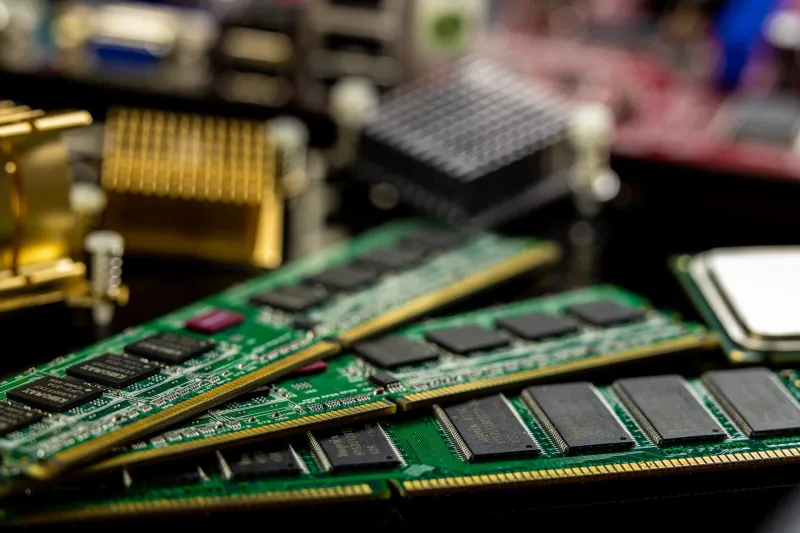
For years, the memory conversation in PC and server circles has been pretty predictable: faster DDR, bigger SSD, rinse and repeat. But right now, underneath the noise of GPU launches and AI chip wars, something genuinely different is happening in memory architecture. Engineers are rethinking the entire stack — from how chips talk to RAM, to how flash storage is layered — and the performance implications are hard to overstate.
If you're building AI workloads, running a data center, or just obsessing over next-gen consumer hardware, this is the story you actually need to be following.
The Bottleneck Nobody Talks About Enough
Here's the blunt truth: raw compute power has been scaling faster than memory bandwidth for years. NVIDIA's H100 GPU can push through hundreds of teraflops of AI computation, but if the data pipeline feeding it is constrained, you're leaving serious performance on the table. This is what engineers call the "memory wall," and it's been quietly throttling AI workloads, database queries, and even gaming frame rates.
DDR5 helped, sure. Bumping bandwidth from DDR4's ~50 GB/s per channel to DDR5's ~100 GB/s was a real step forward. But when you're training large language models or running real-time inference at scale, that's still not enough. The industry knows it, and the solutions being deployed right now are genuinely exciting.
HBM: The Stack That Changed the AI Game
High Bandwidth Memory — HBM — isn't exactly new, but it's hitting its stride in a big way. Instead of placing memory chips on a separate PCB connected via traces, HBM stacks DRAM dies vertically and connects them directly to the processor using through-silicon vias (TSVs). The result is memory bandwidth that blows conventional DRAM out of the water.
HBM3E, which is currently shipping in NVIDIA's H200 and AMD's Instinct MI300X accelerators, delivers over 1.2 TB/s of bandwidth per stack. To put that in perspective, a high-end DDR5 desktop system with four channels might hit around 200 GB/s total. HBM3E is roughly six times faster — and the gap between AI hardware and consumer memory is only widening.
HBM4 is already on the roadmap. Samsung, SK Hynix, and Micron are all racing to sample it by late 2025, with full production expected in 2026. Early specs suggest bandwidth could push past 2 TB/s per stack, with improved power efficiency to match. For hyperscalers like Google, Microsoft Azure, and AWS, this isn't a nice-to-have — it's existential infrastructure.
CXL: The Interconnect Quietly Revolutionizing Data Centers
If HBM is the headline act, CXL — Compute Express Link — is the underrated supporting player that might matter even more for enterprise deployments. CXL is an open interconnect standard built on top of PCIe 5.0 and 6.0, and it fundamentally changes how processors, accelerators, and memory pools communicate.
Traditionally, a server's CPU could only see its own directly attached RAM. CXL breaks that wall. With CXL 3.0, you can build shared memory pools that multiple processors and accelerators can access simultaneously, with cache-coherent semantics — meaning every device sees a consistent view of memory without expensive software overhead.
For AI inference clusters and in-memory databases, this is transformative. Instead of duplicating datasets across dozens of nodes, you attach a CXL memory expander — companies like Samsung, Micron, and Montage Technology are already shipping them — and suddenly your entire cluster shares a unified pool. Real-world deployments at hyperscale facilities are already showing 30-40% reductions in memory-related latency for certain database workloads.
CXL adoption is accelerating fast. Intel's Xeon Scalable "Granite Rapids" and AMD's EPYC "Turin" both ship with native CXL 2.0 support today, with CXL 3.0 expected in next-generation server silicon. For enterprise buyers refreshing infrastructure in 2025 and 2026, this should absolutely be part of the evaluation criteria.
Next-Gen NAND: QLC Gets Serious, and PLC Is Coming
On the storage side, the NAND flash evolution is just as interesting. Most consumers are familiar with TLC (triple-level cell) NAND, which stores three bits per cell and powers the majority of today's SSDs. QLC (quad-level cell) has been lurking in the background as a cheaper, denser alternative, but performance penalties kept it mostly confined to cold storage and read-heavy workloads.
That's changing. Samsung's 8th-gen V-NAND and Micron's 232-layer QLC are pushing endurance and write speeds to the point where QLC is becoming genuinely competitive for mainstream consumer SSDs. Expect QLC-based NVMe drives to hit price parity with TLC at higher capacities — think 4TB and 8TB drives under $150 — within the next 12 to 18 months.
Beyond QLC, PLC (penta-level cell, five bits per cell) is being prototyped by multiple vendors. Intel and SK Hynix have both demonstrated working PLC arrays, though commercial products are likely still 2-3 years out. The density gains are remarkable — you're looking at potentially doubling capacity per die — but the write endurance challenges are significant and haven't been fully solved yet.
For AI training pipelines that need to shuffle massive datasets in and out of storage constantly, the combination of faster QLC with smarter controller firmware is already delivering measurable improvements in data loading times.
What This Means for Regular Enthusiasts
Okay, so most of us aren't buying HBM3E memory modules at a weekend swap meet. But the trickle-down from these enterprise and AI-focused technologies is real, and it's coming faster than you might think.
Consumer DDR6 is on the horizon — JEDEC finalized the spec in 2024, and early adopter systems could appear as soon as late 2025 or early 2026. DDR6 doubles DDR5's per-pin bandwidth and introduces smarter power management, which matters for both desktop performance and laptop battery life.
For storage, the QLC maturation story means enthusiasts will soon be able to fill up a high-capacity NVMe drive without taking the same write-endurance hit they would have two years ago. That's a genuine quality-of-life improvement for anyone doing video editing, game installation, or local AI model hosting.
The memory revolution isn't a single product launch you'll read about in one breathless press release. It's a stack of interconnected advances — in packaging, interconnects, cell architecture, and software — that are compounding right now. The performance gains are real, the timelines are getting concrete, and honestly? It's one of the more exciting infrastructure stories in tech right now.